Date
Oct 17, 2027 - Nov 4, 2027

Group Size: 12 - 22 participants
Price: To be announced
Co-sponsored with: Harvard Exclusive

Deposits made based on these INITIAL Terms & Conditions are fully refundable. When the FINAL Terms & Conditions are published, participants will have an opportunity to review them and either accept and stay on the program or reject and cancel for a full refund.

Activity Level
3

Trip Overview

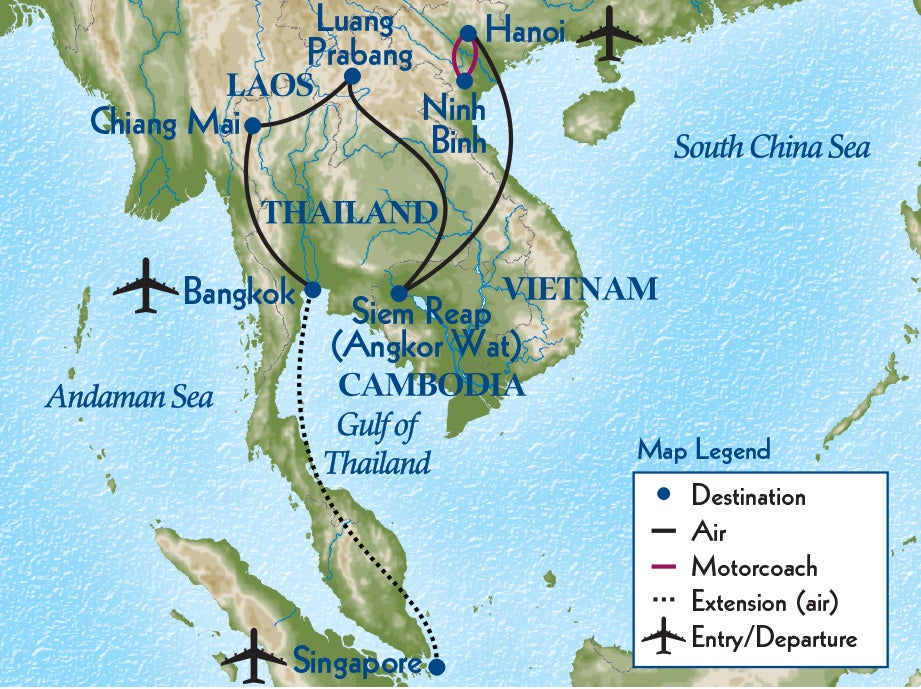
Discover the cultural heart of Southeast Asia on this immersive journey through Vietnam, Cambodia, Laos, and Thailand. Begin in Hanoi with its French-colonial charm, historic temples, and poignant wartime sites, then venture to the dramatic limestone landscapes of Ha Long Bay and Ninh Binh’s rivers and rice paddies. Continue south to the lantern-lit streets and riverside markets of Hoi An, where you’ll explore by boat and on foot and dive into Vietnamese cuisine with a hands-on cooking class and village visit. Fly onward to Siem Reap for two full days among the magnificent temples of Angkor, including Angkor Wat, Ta Prohm, and lesser-visited gems like Banteay Srei and Preah Khan, capped by a traditional dance performance. In Laos, experience the spiritual rhythm of Luang Prabang through the monks’ alms-giving ceremony, a cruise on the Mekong to sacred caves and whiskey-making villages, encounters with rescued elephants, and insight into rural life and rice farming, before riding the new high-speed railway to Vang Vieng and meeting Hmong and Khmu communities. Conclude in vibrant Bangkok, exploring gilded palaces and temples, colorful markets, and landmark sites like the Grand Palace, Wat Pho, and the Jim Thompson House, before bidding farewell to Southeast Asia—or continuing on an optional post-tour extension to Singapore.

itinerary map

calendar icon

Schedule by Day

Click each drop-down below to view a detailed itinerary. For a full view, please select the "print page" button above. 

Please note this itinerary is subject to change.

In the evening, depart the U.S. for Hanoi, Vietnam

Arrive in the Vietnamese capital late this evening and transfer to your hotel. As guests’ arrival times may vary greatly today, there are no group activities planned.

Overnight: Meliá Hanoi

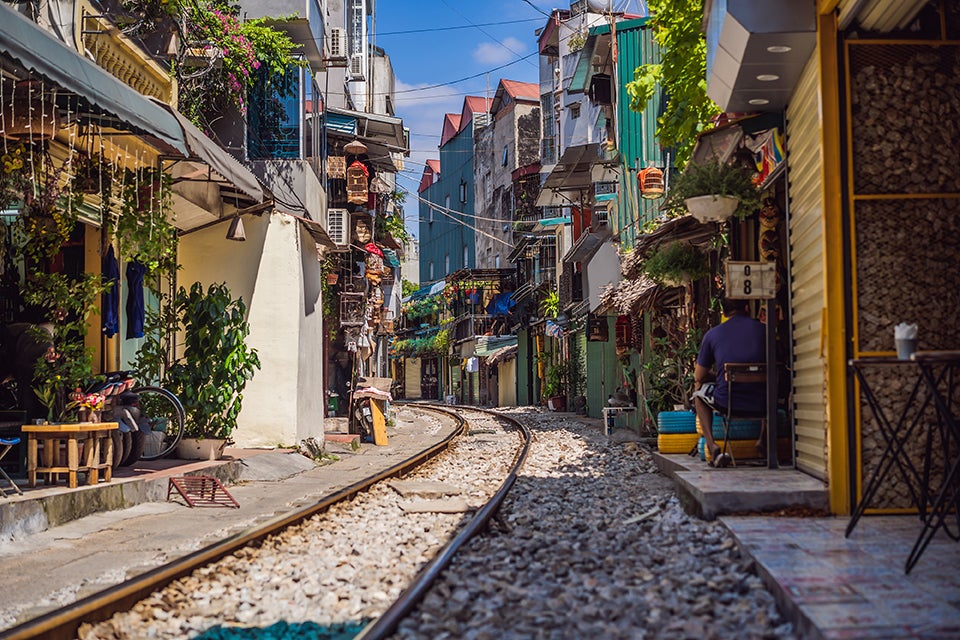
In the morning, get your first taste of Hanoi on an orientation tour of this French-accented city with its broad, tree-lined boulevards and French-colonial architecture. Pass Hoan Kiem Lake in the heart of the city; legend has it that, in the 1400s, a deity rose from the lake and reclaimed the magic sword of Emperor Le Thai To, which was once used to drive the Chinese from Vietnam. Also, see the marvelous Temple of Literature, founded in 1070 and dedicated to Confucius. It later became Vietnam’s first university and remains an active place of worship. 

Your next stop is Hoa Lo Prison, also known as “Hanoi Hilton.” Throughout the Vietnam War and for many years thereafter, the North Vietnamese Army controlled the prison and held American soldiers captive in order to torture and interrogate them. After time for lunch on your own, walk through the narrow streets of the Ancient Quarter (more commonly called the “36 Streets District”), where goods of all types are bought and sold. Each type of shop has its own separate street—Shoe Street, Sugar Street, Paper Street—to help direct customers to their desired product. This is also one of the city’s most popular gastronomic areas, with dozens of excellent restaurants, one of which will be the host venue for the welcome dinner tonight.

Overnight: Meliá Hanoi

Meals: B, D

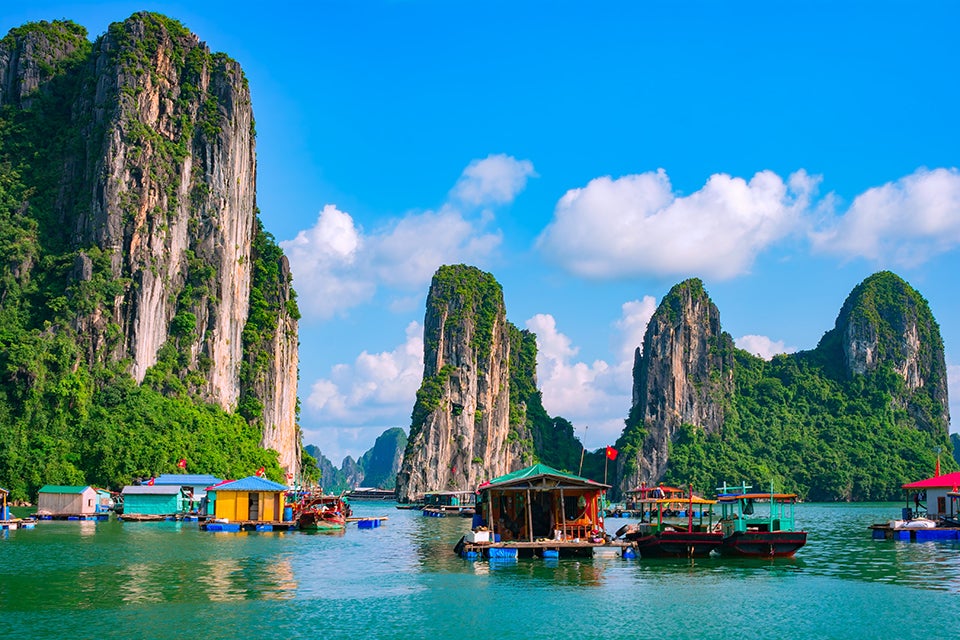
Depart early on a full-day excursion to Ha Long Bay (“Bay of the Descending Dragon”), Vietnam’s legendary waterway sprinkled with some 2,000 islands and islets and surrounded by a fairytale landscape of limestone cliffs and hidden caves. A UNESCO World Heritage site, Ha Long Bay is the home of ancient cultures dating back 25,000 years. Your tour here includes a boat ride on the placid waters and a lunch of local seafood specialties. While the weather in this region can be cool and foggy, it adds to the mystique of the bay.

Return to your hotel in Hanoi tonight and have the evening free to sample some of Hanoi’s renowned fares.

Overnight: Meliá Hanoi

Meals: B, L

In the morning, enjoy a walking tour of Ba Dinh Square, a popular complex of cultural and historic sites. This was the place where, on September 2, 1945, Communist Party leader Ho Chi Minh read the Declaration of Independence, officially establishing the nation of Vietnam. Today, his memory is honored by the Ho Chi Minh Mausoleum, a massive granite tomb complex inspired by Lenin’s Mausoleum in Moscow.

Also, see the bright mustard-colored French colonial Presidential Palace, the official residence of the president of Vietnam that was originally constructed to house the French governor-general of Indochina; and the 1,000-year-old One Pillar Pagoda, built on a single stone pillar to resemble a lotus blossom.

After time for lunch on your own, board your motorcoach for the 90-minute drive south to Ninh Binh, capital of Vietnam’s Red River Delta and UNESCO site known for its majestic landscapes, with sheer limestone mountains rising from rivers and rice paddies. Ninh Binh also served as the first capital of ancient Vietnam in the 10th and 11th centuries CE.

Settle into your resort before taking a sunset walking tour of the surrounding landscapes, including a stop at the Thai Vi Temple and viewpoint of the Tam Coc River. 

Dinner tonight is at the hotel.

Overnight: Meliá Hanoi

Meals: B, D

In the morning, board traditional sampan boats for a leisurely ride through UNESCO-designated Tam Coc, marveling at the stunning limestone mountains and vivid green rice paddies as you pass through secret grottoes along the way.

Then embark on a short drive to the historic citadel of Hoa Lu, Vietnam’s ancient capital. Founded in 968 CE by Dinh Bo Linh (also known as Dinh Tien Hoang), first emperor of the short-lived Dinh dynasty, Hoa Lu served as the cultural, economic, and political hub of Dai Co Viet—the main precursor to modern-day Vietnam. Visit the two temples that mark this historic site: Dinh Tien Hoang Temple, which houses a statue of Emperor Dinh Bo Linh with his three sons; and Le Dai Hanh Temple, built to honor Le Hoan, third ruler of Dai Co Viet and founder of the Early Le dynasty.

After lunch at a local restaurant, return to your hotel, where the rest of the afternoon is at leisure, before dinner together.

Overnight: Jiva Hoa Lu Retreat 

Meals: B, L, D

Return to Hanoi this morning for an afternoon flight to Da Nang, Vietnam’s third largest city. 

Continue to Hoi An, an ancient market city which had the largest harbor in Southeast Asia during the 1st century CE. Now riddled with canals and waterways, Hoi An was originally the commercial capital of the historic Cham people before seeing a succession of Dutch, Chinese, Portuguese, and Japanese traders all contribute to the building of an architecturally diverse and colorful Old Town (which is now a UNESCO World Heritage site). Indeed, during the early part of the 17th century, Hoi An was known as one of the most important trading ports in all of Asia, welcoming tradesmen from as far away as Egypt and England. These days the streets belong to pedestrians and bicyclists since no cars are allowed in the Old Town, making it perfect for exploring on foot.

Enjoy dinner together tonight at a local restaurant.

Overnight: Hotel Royal Hoi An–MGallery 

Meals: B, D

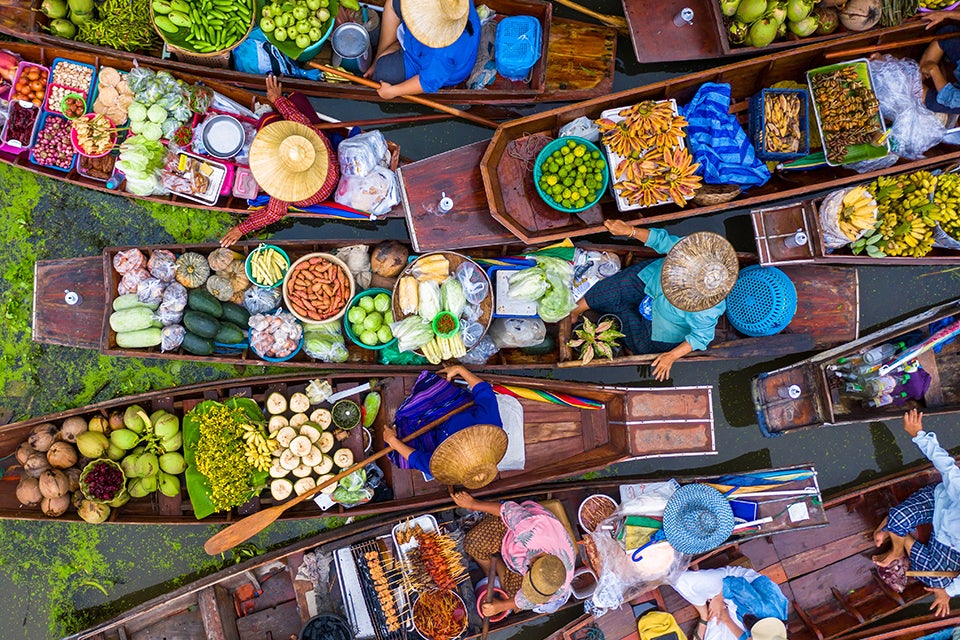
Begin today’s explorations with a leisurely cruise along the Thu Bon River, which brings you to Hoi An’s colorful central market. Then take a walking tour past the low, tile-roofed houses lining the narrow streets and Japanese covered bridge.

You are free this afternoon for lunch on your own.

In the early evening, attend an immersive and interactive Vietnamese cooking class. Watch as a variety of traditional Vietnamese dishes are prepared and then try your hand at creating everything from dumplings to banh mi to rice noodles. Enjoy the fruits of your labor for dinner and take home a recipe book filled with instructions on how to recreate these dishes. 

Overnight: Hotel Royal Hoi An–MGallery 

Meals: B, D

Get an up-close look at Vietnamese life today as you visit a neighboring village nestled amidst seemingly endless rice paddies. Gain insight into the everyday life of a local farming community as you walk through the village past modest homes, vegetable and fruit gardens, and the village temple and husking mill. 

Enjoy lunch together in a local restaurant in a small village outside the town center, then ride your coach to Da Nang. 

Upon arrival, tour the acclaimed Museum of Cham Sculpture, home to the world’s largest collection of Cham sculptures and artifacts, which dates from the 5th to 15th centuries. The Cham people are a small group who originated in Southeast Asia millennia ago—in fact, written records exist of Chams all the way back to the 2nd century CE, but their numbers have dwindled to less than half a million worldwide. Culturally, the Cham people have been influenced by forces ranging from Chinese to Indian to Arabian (the state religion was Hinduism for many centuries, but now many Chams practice a hybrid form of Hinduism and Islam). Built in 1915, the museum is constructed in Cham style, with simple lines, smooth corners, and windows open to the sea air. 

Transfer early this evening to the airport for the 1½-hour flight to Siem Reap, Cambodia. 

Overnight: Sofitel Angkor Phokeethra Golf & Spa Resort 

Meals: B, L

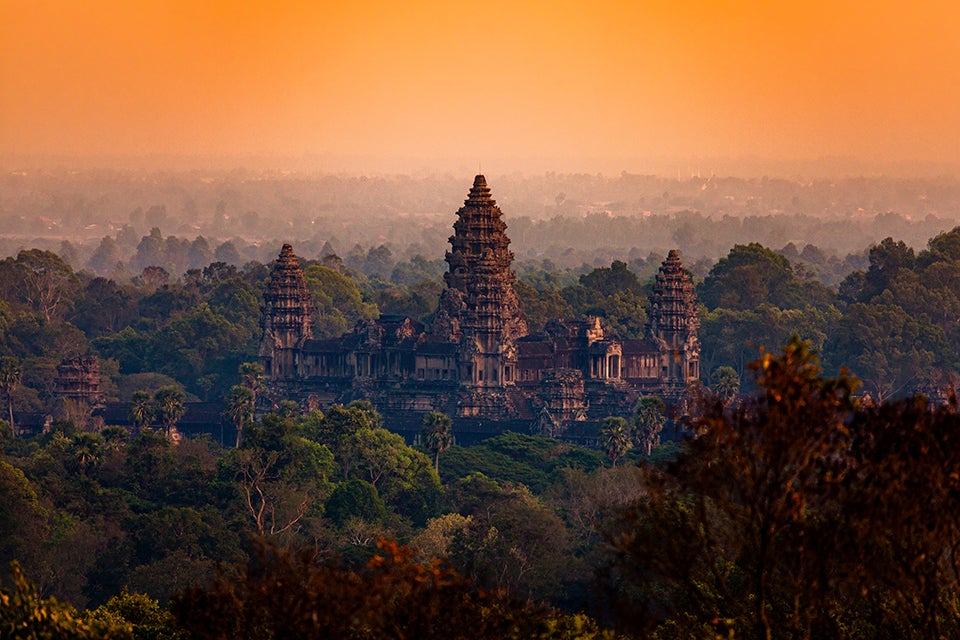
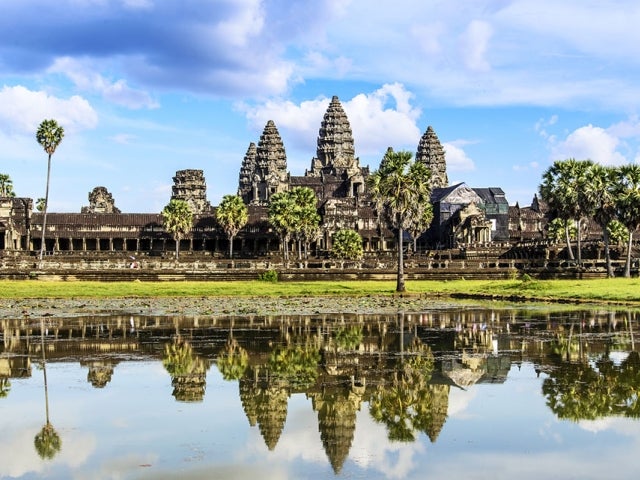
Today marks the first of two full days touring the extensive Angkor Wat temple complex, a small-scale city built between the 9th and 13th centuries. A UNESCO World Heritage site and one of the three great Buddhist sites of the Eastern world (the others are Borobudur in Java and Bagan in Myanmar), Angkor Wat is often called a “lost city,” though it was never lost to the Khmer people. The temple complex was constructed as a Hindu temple dedicated to the god Vishnu by King Suryavarman II in the 12th century CE, but it gradually became Buddhist towards the end of the century. It took more than 500,000 artisans, workers, and slaves some 28 years to complete and comprises five towers, each reaching more than 180 feet high. In 1431, wars with nearby Tai kingdoms resulted in the destruction of the Khmer Empire and of Angkor. Even so, studies reveal that Angkor Wat was still inhabited or at least visited by Khmer people from the 15th to 19th centuries, a contention proven by the fact that one of its main temples contained Buddhist statuary from every century between. Today, the site features magnificent temples and statues from Angkor, as well as various Hindu and Buddhist imagery.

Serenaded by the sounds of the jungle, enter Angkor Wat, the world’s largest religious building, and witness the intricate detail of the bas reliefs and artwork depicting mythological battles and scenes of everyday life. 

Then explore the 12th-century temple of Ta Prohm, a mystical, decaying Buddhist shrine fallen victim to the encroaching jungle. Built in memory of King Jayavarman VII’s mother and abandoned after the fall of the Khmer Empire, the ruins here are a result of centuries of neglect; however, when efforts to conserve the temple began, it was decided that Ta Prohm would be left largely as it was and is, with massive tree roots virtually strangling parts of the stone façades, creating an irresistible tableau for photographers.

After lunch at a local restaurant, take a ride on traditional tuk-tuks to visit Angkor Thom, the last capital of the Khmers, whose once-mighty empire dominated much of Southeast Asia for more than 600 years. Sites here include the Terrace of the Elephants, eight feet high and nearly 1,000 feet in length with a lotus seat at its center for the king; Terrace of the Leper King, with its emblematic and enigmatic statue of a king whose likeness remains a mystery; the Baphuon, an immense temple built in the mid–11th century and dedicated to the Hindu god Shiva; and the stunning Bayon Temple, an imposing stone edifice of 54 towers each carved with four serene faces and decorated with bas reliefs detailing the reign of King Jayavarman VII (1181–1202).

Overnight: Sofitel Angkor Phokeethra Golf & Spa Resort 

Meals: B, L, D

Your destination this morning is tiny Banteay Srei, a temple built for the Hindu god Shiva in the 10th century with exceptional carvings in its sandstone walls. Banteay Srei’s artistry on a miniature scale distinguishes it from other Angkorian temples and has earned it the nickname “the jewel of Khmer art” (its name literally translates as either “citadel of women” or “citadel of beauty”).

Continue to Banteay Samre, an elaborate 12th-century temple dedicated to the Hindu god Vishnu. Banteay Samre is one of Angkor’s most complete complexes, thanks to restoration efforts using original materials.

After enjoying lunch together at a local restaurant, visit the temple of Preah Khan, the “Sacred Sword,” a 12th-century complex of halls and pavilions, causeways and moats, and sculpted garudas and serpents built by King Jayavarman VII in memory of his father. The World Monuments Fund has maintained this piece of living history since 1991, preferring to leave it in its ruined state rather than attempt to improve or change the original structures.

Tonight, enjoy dinner accompanied by a traditional cultural dance show.

Overnight: Sofitel Angkor Phokeethra Golf & Spa Resort 

Meals: B, L, D

Today begins with some time at leisure, perhaps to enjoy the resort’s many amenities.

After lunch on your own, visit Satcha Handicrafts, a development project where young adults are taught the traditional crafting methods of the region, including stone carving, woodworking, traditional painting, and lacquer application.

Head to the airport this afternoon for your flight to Luang Prabang, Laos. Upon arrival, transfer to your hotel in time for dinner together. 

Overnight: MyBanLao Hotel

Meals: B, D

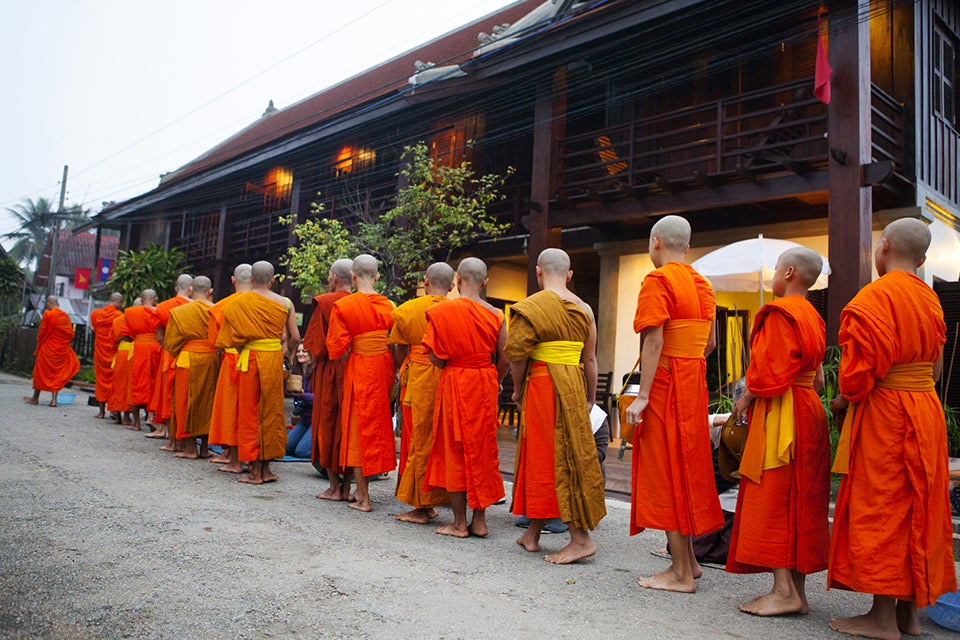
Early today, take part in a time-honored tradition: the “tak-bat” where hundreds of saffron-robed monks collect alms from fellow Buddhists. Every morning at dawn, the monks silently line the streets of Luang Prabang and receive helpings of sticky rice from townspeople. It is a symbiotic relationship; the monks eat the food, while townspeople receive spiritual redemption.

See glimpses of old Indochina as you visit the colorful open-air morning market, then return to your hotel for breakfast.

Then, board a traditional wooden river cruiser for a half-day cruise along the Mekong River, lifeblood of Southeast Asia. The first stop is at the Pak Ou Buddha Caves, which have been home to many thousands of Buddha statues and images since King Setthathirath declared the caves a holy spot in the 16th century.

Board your boat once again for lunch as you make your way to the Ban Sang Ha “Whiskey Village.” Laos is famous for its homemade whiskey, and here you can observe the distillation process and enjoy a sample if you choose. 

The cruise concludes in Luang Prabang, where you disembark before dining together at a local restaurant.

Overnight: MyBanLao Hotel

Meals: B, L, D

Today, come face-to-face with one of Asia’s most storied creatures and one of the world’s most revered animals: the elephant. The Elephant Village in the scenic Nam Khan River valley is a community-based eco-project intending to give elephants who have been endangered by extensive forest logging a new home. Meet the mahouts who train these highly intelligent gentle giants.

Next, visit a communal rice farm situated in the scenic Laotian countryside and get an inside look at the life of a local farmer and enjoy a lunch of traditional Laotian specialties. Learn about the climate and work necessary to grow rice and try your hand at some of the rice farming activities, as well as learn about the other trades practiced here, including bamboo weaving, blacksmithing, and sugar cane processing.

Late this afternoon, return to your hotel, where you have the evening at leisure and dinner on your own.

Overnight: MyBanLao Hotel

Meals: B, L

This morning, visit the Old City of Luang Prabang, a UNESCO site, and tour the beautiful 16th-century Wat Xieng Thong temple complex, followed by the National Museum, formerly the royal palace, which houses the personal collection of the last Laotian royal family.

After lunch at a local restaurant, board the new Boten-Vientiane railway for the journey from Luang Prabang to Vang Vieng. First opened in December of 2021, the Boten-Vientiane railway is the only electrified, high-speed railway in Laos, making it possible to travel from the Lao capital of Vientiane to the town of Boten on the Chinese border in just four hours compared to the 15 it takes when traveling by car.

After a 1-hour train ride, arrive in Vang Vieng, a center for eco-tourism in Laos and home to a wide range of ethnic tribal villages. With a population of under 8 million people, Laos is home to approximately 160 ethnic groups speaking more than 80 distinct languages.

Upon arrival in Vang Vieng, check into your hotel where you enjoy the rest of the afternoon at leisure before dining together tonight.

Overnight: Riverside Boutique Resort

Meals: B, L, D

Encounter two of Laos’ ethnic groups today, starting with a visit to a Hmong village to learn about traditional basket weaving.

Originally hailing from southern China, the Hmong people fled conflict in their ancestral homeland in the 19th century, migrating to the mountainous regions of Vietnam, Thailand, Myanmar, and Laos. Today, the Hmong account for almost 10% of the total Lao population.

Then visit a Khmu village for an introduction to rice wine brewing Unlike the Hmong, the Khmu are native to Laos, but when the Lao people began migrating from China to Laos in the 13th century, they drove the Khmu into the country’s remote mountainous regions, where they continue to live in relative isolation to this day.

After the morning village visits, attend a traditional Lao cooking class at a local farm-to-table restaurant.

Then, board your motorcoach for the 90-minute drive to Vientiane for an early-evening flight to Bangkok.

Overnight: Royal Orchid Sheraton

Meals: B, L

Set out to explore sprawling Bangkok, in all its colorful, tumultuous, and modern splendor. Forty times larger than Thailand’s next largest city and housing everything from multinational corporations to world-class healthcare centers, Bangkok is Thailand’s heart and soul.

Begin touring at the Grand Palace, an immense complex of ornate buildings, halls, and gardens spreading along the bank of Thailand’s main river, the Chao Phraya. The original palace was built in 1782 by King Buddha Yodfa Chulaloke, the first king of the Chakri Dynasty, after he moved the nation’s capital to Bangkok from Thonburi. Subsequent kings have augmented the complex, creating the magnificent compound we see today. Though it is no longer the residence of the monarch, the Grand Palace still hosts several official functions for the king throughout the year. Here, see the elaborate Temple of the Emerald Buddha, with its venerated 31-inch-high statue carved from a single piece of jade.

Then, ride “tuk tuks,” traditional three-wheel open-air taxis, to Wat Pho Temple, home of the Reclining Buddha. Covered in gold leaf, the icon measures some 49 feet tall by 151 feet long. Wat Pho is also the home to Thailand’s largest collection of Buddha images, and the complex is also known for being the birthplace of traditional Thai massage.

Next, visit the Bangkok Flower Market, a riot of multicolored blooms located in Bangkok’s Old City.

Enjoy the evening at leisure for dinner on your own.

Overnight: Royal Orchid Sheraton

Meals: B, L

In the morning. visit the Jim Thompson House, the prized Southeast Asian art collection of the American who revived the Thai silk industry. 

During World War II, American Jim Thompson was posted in Bangkok as a U.S. intelligence agent. After the war, Thompson remained and founded the Thai Silk Company Limited in 1948. Hidden away on a quiet street in the center of the city, this home presents an excellent example of traditional Thai residential architecture, and houses a highly regarded collection of South Asian art.

Your final afternoon on tour is at leisure before gathering this evening for a farewell dinner.

Overnight: Royal Orchid Sheraton

Meals: B, D

Depending on flight schedules, some guests will leave in the morning and return to the U.S. this evening, while others will depart this evening and return to the U.S. one day later (on January 24). Guests with evening flights will have hotel rooms reserved for late check-out.

Meals: B

price icon


Pricing

Category

Double Occupancy

Single Occupancy

Land Only

To be announced

To be announced

Air-inclusive from BOS, JFK

To be announced

To be announced

To be announced

To be announced

To reserve a space on this program, a $2,000 deposit is required per person. Final payment is due 120 days before departure (June 19, 2027) payable by major credit card, check, or wire transfer. Participants will receive an invoice directly from the tour operator, Odysseys Unlimited for all subsequent payments after the initial deposit.

Notification of cancellation must be received in writing by HAA from the participant. Deposits made based on these INITIAL Terms & Conditions are fully refundable. When the FINAL Terms & Conditions are published, participants will have an opportunity to review them and either accept and stay on the program or reject and cancel for a full refund.


Accommodations

  • Three nights at Meliá Hanoi
  • Two nights at Jiva Hoa Lu Retreat 
  • Two nights at Hotel Royal Hoi An–MGallery 
  • Three nights at Sofitel Angkor Phokeethra Golf & Spa Resort 
  • Three nights at MyBanLao Hotel 
  • Once night at Riverside Boutique Resort 
  • Three nights at Royal Orchid Sheraton 

Optional Post-Tour Extension: Singapore

 November 4 - 7, 2027

Extend your journey with a three-night stay in dynamic Singapore, exploring its multicultural neighborhoods, colonial heritage, and cutting-edge urban design. Discover Kampong Glam, Little India, and Chinatown; visit the National Orchid Garden and see landmarks like Marina Bay and the Merlion. Experience Singapore by night with a light show at Gardens by the Bay and a scenic bumboat ride on the Singapore River. Enjoy time at leisure to sample the city’s famed cuisine before a final day amid the Supertree Grove and conservatories of Gardens by the Bay, then depart for home.

Overnight: Carlton City Hotel Singapore

Meals: 4B, 2D

Pricing: to be announced 


What to Expect

Activity Level 3

activity iconThis program involves walking 2–4 miles per day, sometimes during the heat of the day, and guests must be able to keep pace with the group in crowded cities such as Hanoi and Bangkok, as well as at ancient sites like Angkor Wat. Expect long days of motorcoach travel and sightseeing, with the need to get on and off the coach several times a day without assistance. The itinerary includes a few internal flights, requiring airport transits and security screening, as well as boat travel on the Mekong River, where guests must be able to embark and disembark without assistance. At Angkor Wat in Cambodia, be prepared for uneven terrain and steep stairs throughout the complex. This program is not suitable for guests with mobility issues or those who use walkers, scooters, or rollators.
Study Leader(s)

To be announced

For More Information

Please email haatravels@harvard.edu or call our office at 800-422-1636 or 617-496-0806.