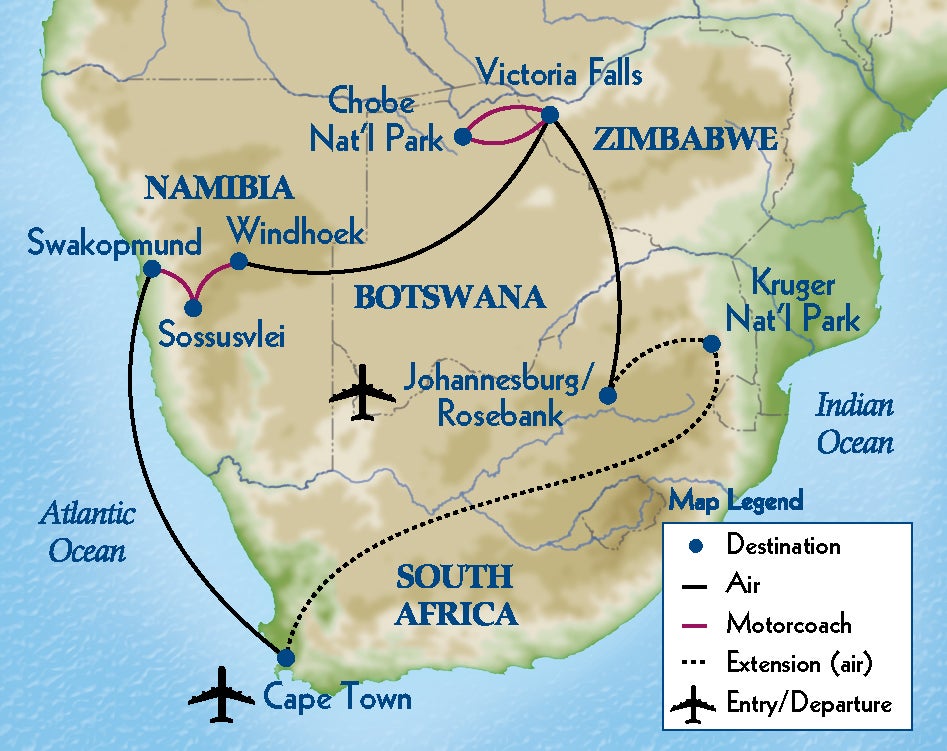
Explore the natural wonders, complex histories, and vibrant cultures of three extraordinary countries on this 18-day Southern Africa journey, from South Africa’s dynamic cities to the thundering Victoria Falls and the otherworldly deserts of Namibia. Begin in Johannesburg and Soweto, tracing the legacy of apartheid and Nelson Mandela before flying to Victoria Falls for up-close encounters with local communities, sunset cruises on the Zambezi, and a rhino safari, plus a full day of game viewing on Botswana’s wildlife-rich Chobe River. Continue to Namibia to experience the stark beauty of the Namib Desert and Sossusvlei’s towering red dunes, the German-accented coastal town of Swakopmund and Walvis Bay’s marine life, then fly on to Cape Town for world-class wine tasting, a full Cape Peninsula excursion to the Cape of Good Hope and Boulders Beach penguin colony, and time to explore Bo-Kaap, Kirstenbosch Gardens, and the iconic Table Mountain before returning home.
Schedule by Day
Click each drop-down below to view a detailed itinerary. For a full view, please select the "print page" button above.
We depart on our overnight flight to Johannesburg.
Today we arrive in “Joburg,” Africa’s fourth largest city. Guests’ arrival times may vary greatly, so we have no group activities planned. At our hotel located in the suburb of Rosebank, our rooms are reserved for the night prior, so guests who arrive early this morning are welcome to have breakfast there. The day is free to rest and relax, and to enjoy lunch and dinner on our own in the “City of Gold,” the nation’s largest and most diverse metropolis. After struggling with crime and poverty for years post–Soweto Uprising, Johannesburg is now a burgeoning travel destination, with many rooftop bars and trendy restaurants to explore.
Overnight: 54 on Bath
Meals: B
We meet our fellow travelers today as we embark on a tour of Johannesburg’s renowned district of Soweto. The “Southwest Townships” (from which the “Soweto” name derived) was originally established in the 1930s when the Dutch government began using “townships” as part of a system of racial segregation that moved Black laborers out of Johannesburg. Soweto garnered attention in the 1970s when its Black inhabitants fought against apartheid; today, it is a vibrant residential area. Here we see the home of former Archbishop Desmond Tutu and visit Nelson Mandela’s home, now a museum. Next, we visit the Hector Pieterson Memorial – a monument to the Soweto Uprising, a series of protests and demonstrations led by Black school children against apartheid. It was here that 13-year-old Hector Pieterson was among those shot and killed on June 16, 1976, while protesting the government’s order that Black schools deliver instruction in Afrikaans, the Germanic language that evolved from the Dutch after they began colonizing the area. We meet a local Sowetan and listen to her personal stories, both of the Soweto uprising and of what life is like today in this township. Afterwards, we enjoy lunch together at a local restaurant then return to our hotel, where the remainder of our afternoon is at leisure. Tonight, we toast our adventure ahead at a welcome dinner in our hotel.
Overnight: 54 on Bath
Meals: B, L, D
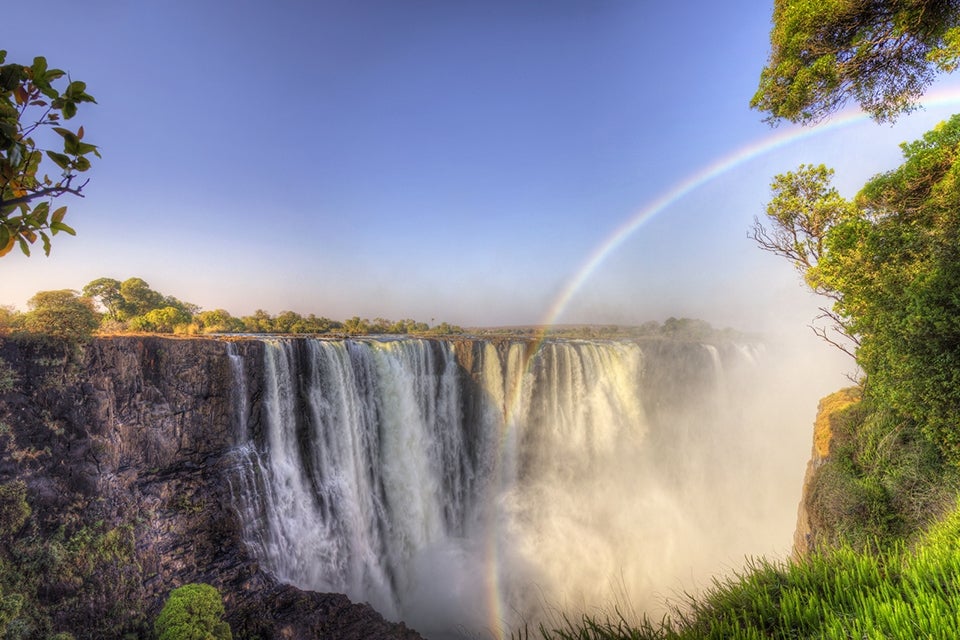
We return to the airport for our flight to Victoria Falls this morning. Upon arrival early this afternoon, we board a motorcoach and travel to our hotel, which sits less than two miles from the mighty Victoria Falls. With its 300-foot-deep gorge and thundering spray, Victoria Falls, known in local Kololo language as Mosi-oa-Tunya (the smoke that thunders), is a wonder of the natural world, especially as hippos, elephants, crocodiles, and other animals roam freely in the surrounding jungle. “Vic” Falls’ reach is higher and even more impressive than that of Niagara, as it plunges some 300 feet into the Zambezi Gorge below, forming the single largest cascade of water on earth. We take a guided walk of approximately three miles on paved pathways in a protected area of the falls free from wildlife, featuring unobstructed viewpoints where we have ample opportunity to take photographs. Tonight, we enjoy dinner together at the hotel.
Overnight: The Victoria Falls Hotel
Meals: B, D
Today, we encounter local life up close on a visit to a local grade school. We meet with teachers and students who treat us to a performance of traditional music and dance. Our tour director will facilitate the donation of any school supplies or books you may choose to bring as a greatly appreciated gift. Following our school visit, we spend some time walking through the town of Victoria Falls and visiting artisan shops. Lunch is on our own today; we may choose to remain in town or return to the hotel. Late this afternoon, we travel a short distance to embark on a “Sundowner” cruise on the mighty Zambezi River, where we keep our eyes peeled for wildlife along the river’s banks as the sun sets. We enjoy dinner on board our boat before returning to our hotel.
Overnight: The Victoria Falls Hotel
Meals: B, D
This morning, we embark on a rhino safari to look for of the most endangered of the “Big Five” species, as well as other game we may encounter. After spending the early afternoon at leisure, we enjoy a late-afternoon lecture, at which a guest speaker discusses the trials and travails of David Livingstone, the 19th-century Scottish medical missionary and explorer. Livingstone is one of the most famous European explorers of the Victorian era and is well-known as the man who “discovered” Mosi-oa-Tunya and named it for Queen Victoria in 1855 – when, actually, members of the Makololo tribe were the ones who escorted Livingstone to the viewing site where he first spotted it. After glimpsing the falls for the first time, Livingstone wrote: “No one can imagine the beauty of the view from anything witnessed in England. It had never been seen before by European eyes; but scenes so lovely must have been gazed upon by angels in their flight.” After this informative and fascinating session, we dine together tonight at our hotel.
Overnight: The Victoria Falls Hotel
Meals: B, D
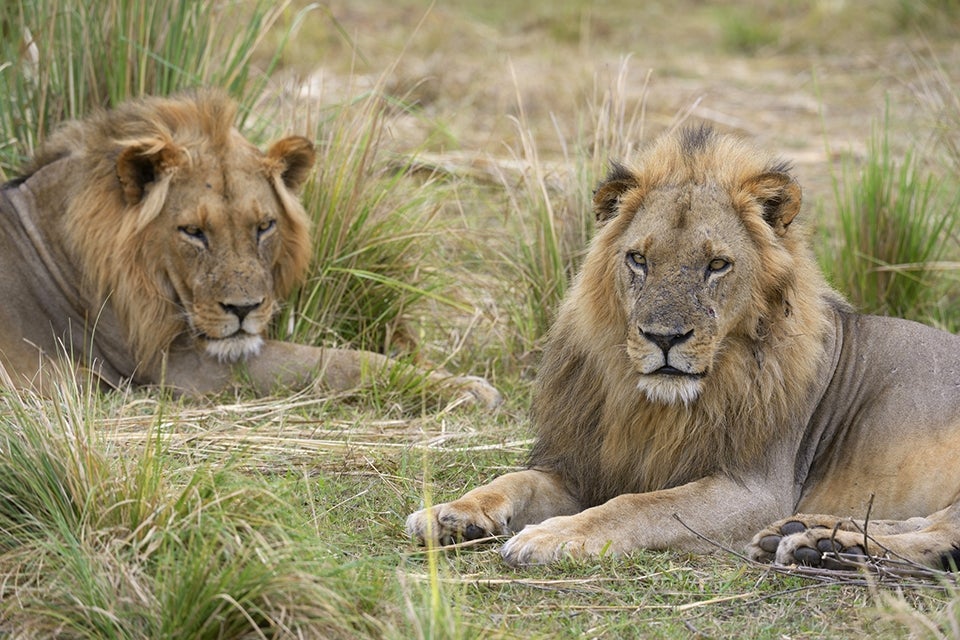
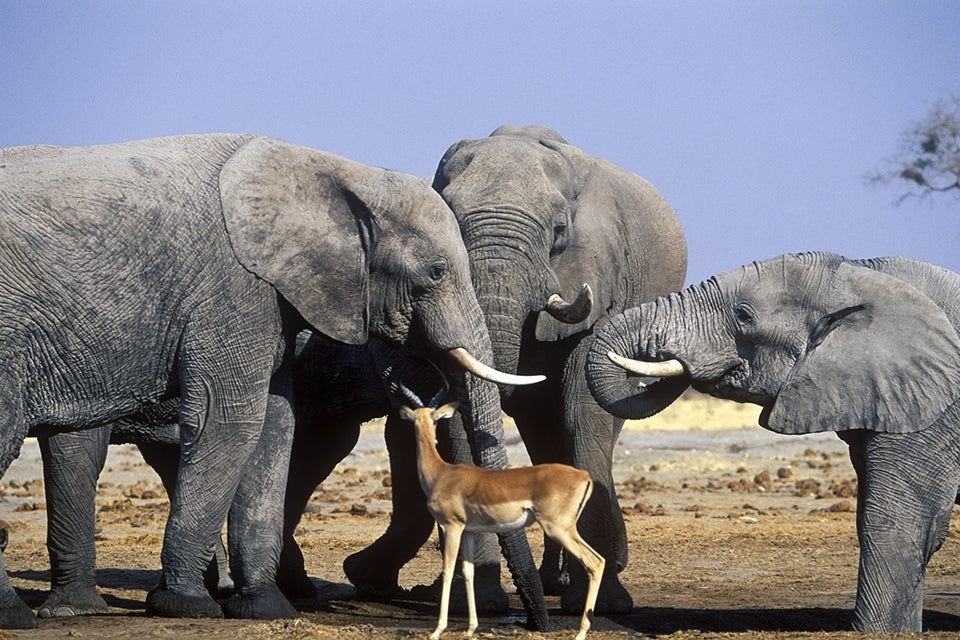
Our journey to spectacular Chobe National Park in neighboring Botswana allows us to take both a morning game drive and an afternoon game cruise through this exceptional reserve. Since many animals congregate along the river that runs through Chobe, we make a point of driving there in search of antelope, buffalo, and hundreds of species of birds. Thanks to its varied terrain and plentiful water supply, Chobe is renowned for its predator population (including lions) as well as hippos and the rare puku, a species of antelope indigenous to the area. Chobe is also home to the world’s largest elephant population (some 120,000), meaning we may spot one of these majestic creatures. We enjoy lunch in Botswana today; dinner tonight is at our hotel in Victoria Falls.
Overnight: The Victoria Falls Hotel
Meals: B, L, D
Today, we are in transit, flying to Windhoek, Namibia’s German-influenced capital and the country’s largest city (pop. 461,000). With just over 2.5 million inhabitants in an area some 25% larger than that of France, Namibia has the world’s second lowest population density. Upon arrival, we board a motorcoach for the one-hour transfer to our hotel. The remainder of our afternoon and evening is free to spend as we wish. We may choose to join our tour director for a brief orientation tour of Windhoek, or to simply relax at the hotel, perhaps enjoying the outdoor swimming pool. Lunch and dinner are on our own today.
Overnight: Windhoek Country Club Resort
Meals: B
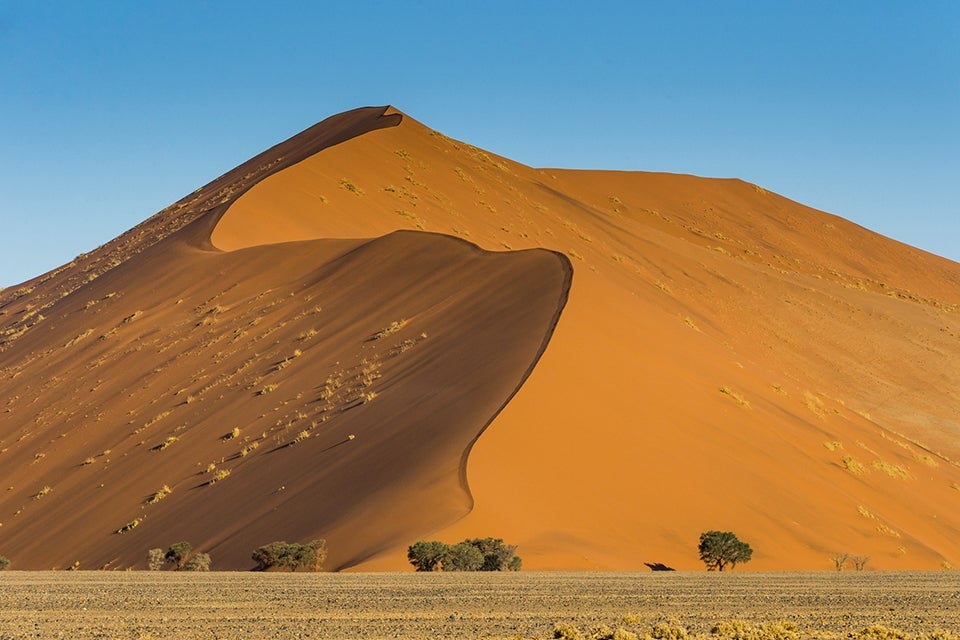
We set out on our journey to the Namibian desert; during our travels, we spy vast gravel plains and giant sand dunes that rise more than a thousand feet high. Though Namibia is one of the youngest of the African nations (as it only became a nation in 1990), it boasts a 130- million-year-old desert, the Namib – our destination today. Specifically, we’re traveling to the Central Namib, which stretches for some 700 miles along the coast and is covered with huge dunes which each support tiny ecosystems – largely from the fog that rolls in off the ocean. We stop for a quick lunch en route to the western part of this scenic country. Late this afternoon, we reach our lodge, where we dine tonight. We’re in the heart of the Namibian desert, a kaleidoscope of color and mesmerizing sands which are at their most breathtaking during sunrise and sunset.
Overnight: Sossusvei Lodge
Meals: B, L, D
We embark on an early-morning excursion to the world’s highest crested sand dunes at Sossusvlei. Here, the red-orange dunes seem to be “alive” – they constantly change and undulate as a result of the desert winds. Despite their barren look, the dunes actually support a rich, complex system of wildlife that includes the blind golden mole and a large dancing spider known as the “white lady,” plus geckoes and lizards. We may choose to climb on the velvety sands of Big Mama, as the locals fondly refer to the largest dune. We return to our lodge afterward for a leisurely lunch during the heat of the day and have some time to relax and enjoy the stunning scenery here. Tonight, we dine at our lodge.
Overnight: Sossusvei Lodge
Meals: B, L, D
We travel through the Namib Desert today en route to German-accented Swakopmund, Namibia’s largest port. During our journey, we hope to see oryx, springbok, and ostrich in the wild, as well as picturesque mountain scenery. We arrive in Swakopmund in time for a late lunch, and then we get acquainted with the town by visiting the Natural History Museum, which occupies a former harbor warehouse and lends insight into Namibia’s colonial past and rich natural resources. This evening, we enjoy dinner together at our hotel.
Overnight: Swakopmund Hotel and Entertainment Centre
Meals: B, L, D
We set out from nearby Walvis Bay for a half-day cruise and lunch along Namibia’s coastline this morning. “Walvis” is the Dutch word for whale, and the Dutch who named the bay did so due to the large numbers of southern right whales which grazed the harbor for its rich plankton supply. Cruising out to sea on a catamaran, we see this renowned waterway – Namibia’s only natural harbor – from the perspective of the many mariners who went before, witnessing some of the shipwrecks the coast has claimed, as well as the Cape fur seals, pelicans, and other sea birds native to these waters. Our nautical exploration of this rugged and striking region inland tribespeople call “the land God created in anger” will provide a cool respite after the arid desert atmosphere of Sossusvlei. After lunch aboard the cruise, we take a short tour of the Walvis Bay Lagoon, a protected area which is home to many species of water birds, including the migratory greater and lesser flamingoes. Then we return to Swakopmund, where we have the remainder of the day at leisure to explore this charming coastal city with its palm-lined streets and historic German architecture on our own. Options abound: visit the National Marine Aquarium or the Swakopmund Military Museum, venture to the main beach area, or spend time browsing at one of the many shops or the local outdoor crafts market. Dinner tonight is on our own.
Overnight: Swakopmund Hotel and Entertainment Centre
Meals: B, L
This morning, we visit Swakopmund’s Crystal Gallery, home of the largest quartz crystal cluster in the world – a 30,000-pound, 520-million-year-old chunk of rock that towers some 10 feet tall. We then transfer to the airport for our flight to one of the great cities in Africa, and indeed the world: Cape Town. After our flight, we arrive in Cape Town, South Africa, this evening. We transfer to our hotel in the heart of this bustling city and enjoy dinner on our own tonight.
Overnight: Pepperclub Hotel
Meals: B
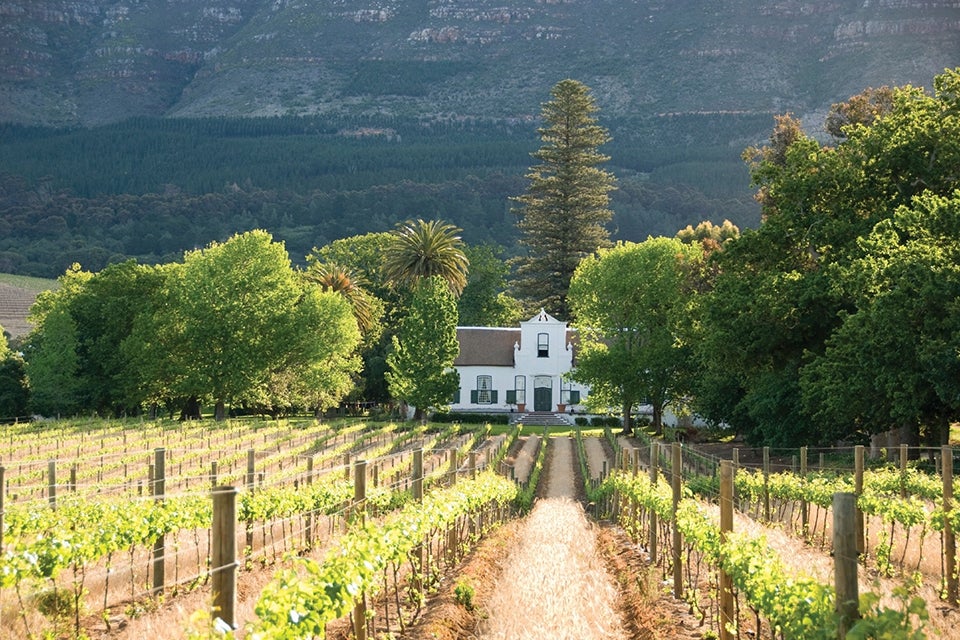
South Africa is one of the finest wine-producing countries in the world – and some of its best vineyards lie a mere 45 miles east of Cape Town. We embark on a full-day excursion through the Cape Winelands region, which has been producing wine since 1679. We travel through this historic region and stop at a winery here for a visit and lunch in their superb restaurant. We return to our hotel late this afternoon; the remainder of the day is at leisure, and we dine on our own tonight in this cosmopolitan city. Please note that the exact order of sightseeing today and over the next two days may vary so that we can take advantage of the best possible weather to visit Table Mountain.
Overnight: Pepperclub Hotel
Meals: B, L
On today’s excursion to the Cape Peninsula, we visit the place that Sir Francis Drake called “the most stately thing and the fairest Cape we saw in the whole circumference of the earth”: the Cape of Good Hope. We pass by lovely Hout Bay before reaching the Cape of Good Hope Nature Reserve, with some 19,000 acres of protected parkland. Here on this unspoiled peninsula, mountains drop into the sea, unique flora thrives, and bird life is abundant. A funicular takes us to the summit of the Nature Reserve for a stupendous ocean view. After a seafood lunch in historic Simon’s Town – headquarters of the South African Navy – we continue on to Boulders Beach, where we visit a unique penguin colony. From one pair introduced here in 1982, some 3,000 penguins now make their home at Boulders. Dinner tonight is at a local restaurant.
Overnight: Pepperclub Hotel
Meals: B, L, D
Our tour of Cape Town this morning features the Bo-Kaap neighborhood, the city’s historical center of Cape Malay culture. This hillside neighborhood of brightly colored homes and businesses is one of the most ethnically diverse areas in Cape Town, and its picturesque setting and cobbled streets have made it a desirable place to live. We learn about Bo-Kaap’s history as the Malay Quarter, owing to the thousands of Capetonians of Southeast Asian descent who made the area their home. We also pay a visit to Kirstenbosch National Botanical Garden, considered among the finest in the world. Cutting a swath across one thousand acres on the eastern slopes of Table Mountain, the property was bequeathed to South Africa by wealthy industrialist Cecil Rhodes upon his death in 1902. The gardens planted here are almost exclusively devoted to the indigenous plants of South Africa – approximately 9,000 of the nation’s 22,000 species. Following our tour, we return to Cape Town for a visit by cable car (weather permitting) 3,500 feet to the top of Table Mountain. The views from the summit are phenomenal – a photographer’s dream. We return to our hotel in the mid-afternoon; tonight, we toast our Southern Africa Odyssey together with a farewell dinner.
Overnight: Pepperclub Hotel
Meals: B, D
Today we depart Cape Town airport on our overnight return flight to the United States.
Meals: B
We arrive in the U.S. today and connect with our domestic flights home.
Pricing
Category
Double Occupancy
Single Occupancy
Land Only
$10,295 per person
$12,290
Air-inclusive from BOS, JFK, Wash DC Dulles
$11,854 per person
$13,849
Round trip air transportation from listed cities above; Hotel accommodations per the itinerary; meals per the itinerary: breakfast daily, 8 lunches, 10 dinners; wine/beer/soft drinks and water included with group lunches and dinners; welcome and farewell receptions; entrance fees to all sites listed in the itinerary; land transportation by private motorcoach per itinerary; bottled water on bus while touring; transfers to/from the airport upon arrival and departure for those booking Operator’s air reservations; services of an experienced tour director; luggage handling upon arrival and departure at the hotels; all gratuities; complete pre-tour documentation and materials.
Passport and visa fees; airport porterage; transfers for land only guests; meals not included in the itinerary; optional sightseeing excursions, any personal items not listed as included such as telephone calls, personal services and travel extensions, room service, liquors (other than what is listed above), mineral water, à la carte orders and laundry charges; trip cancellation and interruption insurance.
To reserve a space on this program, a $2,000 deposit is required per person. Final payment is due 120 days before departure (November 25, 2026) payable by major credit card, check, or wire transfer. Participants will receive an invoice directly from the tour operator, Odysseys Unlimited for all subsequent payments after the initial deposit.
Notification of cancellation must be received in writing by HAA from the participant. Cancellations received within 14 days of booking are eligible for a full refund, provided that initial deposits were made 121 days or more prior to departure. After 14 days, $1,000 per person becomes non-refundable.
The program terms and conditions can be found here and must be acknowledged upon registration.
Accommodations
Two nights at 54 on Bath in Johannesburg
Four nights at The Victoria Falls Hotel in Victoria Falls
One night at Windhoek Country Club Resort in Windhoek
Two nights at Sossusvlei Lodge in Sossusvei
Two nights at Swakopmund Hotel and Entertainment Centre in Swakopmund
Four nights at the Pepperclub Hotel in Cape Town
Optional Post-Tour Extension: Kruger Kapama Private Game Reserve
April 10 - 14, 2027
Extend your Southern Africa adventure with a 4-day stay at Kapama Private Game Reserve, a premier private reserve adjacent to Kruger National Park. Fly from Cape Town to Hoedspruit and settle into your lodge before heading out on your first game drive in open Land Rovers, guided by expert rangers and trackers in search of the “Big Five” and a rich variety of other wildlife and bird species. Take advantage of the flexibility of a private reserve, with longer viewing hours, the ability to go off-road, and opportunities to step out on foot, while enjoying comfortable lodge amenities and all-inclusive meals between morning and afternoon drives. After three thrilling days immersed in the sights and sounds of the African bush, return via Johannesburg for your onward flight home.
Overnight: Kapama Buffalo Camp (3 nights)
Meals: 4B, 2L, 3D
$3,095 per person, double occupancy
$4,290 single occupancy
The opportunity to register for the extension will be provided directly from the tour operator following the participants confirmation on the program
What to Expect
Activity Level 3
This program involves 2–4 miles of walking per day, sometimes during the heat of the day, including walking up hills or stairs without handrails and moderate hikes on uneven terrain. The optional walk along the Sossusvlei Sand Dunes can be particularly challenging, and guests should expect 1–3 miles of walking around Victoria Falls, where the surrounding area will be wet and slippery. There will be long days of motorcoach travel and sightseeing, and guests must be able to get on and off the motorcoach several times a day without assistance. Participants will also need to climb in and out of safari vehicles independently, stepping up approximately 12–16 inches, and should be prepared for very bumpy motorcoach rides on Days 9 and 11 in Namibia that can last several hours. Multiple flights are included during the tour, and some lodges will require guests to walk up and down approximately 30 steps to reach common or dining areas. For these reasons, this program is not suitable for guests with mobility issues or for those who use walkers, scooters, or rollators.


 This program involves 2–4 miles of walking per day, sometimes during the heat of the day, including walking up hills or stairs without handrails and moderate hikes on uneven terrain. The optional walk along the Sossusvlei Sand Dunes can be particularly challenging, and guests should expect 1–3 miles of walking around Victoria Falls, where the surrounding area will be wet and slippery. There will be long days of motorcoach travel and sightseeing, and guests must be able to get on and off the motorcoach several times a day without assistance. Participants will also need to climb in and out of safari vehicles independently, stepping up approximately 12–16 inches, and should be prepared for very bumpy motorcoach rides on Days 9 and 11 in Namibia that can last several hours. Multiple flights are included during the tour, and some lodges will require guests to walk up and down approximately 30 steps to reach common or dining areas. For these reasons, this program is not suitable for guests with mobility issues or for those who use walkers, scooters, or rollators.