Date
Feb 12, 2027 - Feb 26, 2027

Group Size: 12 - 22 participants
Price: Starting from $6,996 per person, double occupancy land only 
Co-sponsored with: Harvard Exclusive

Activity Level
3

Trip Overview

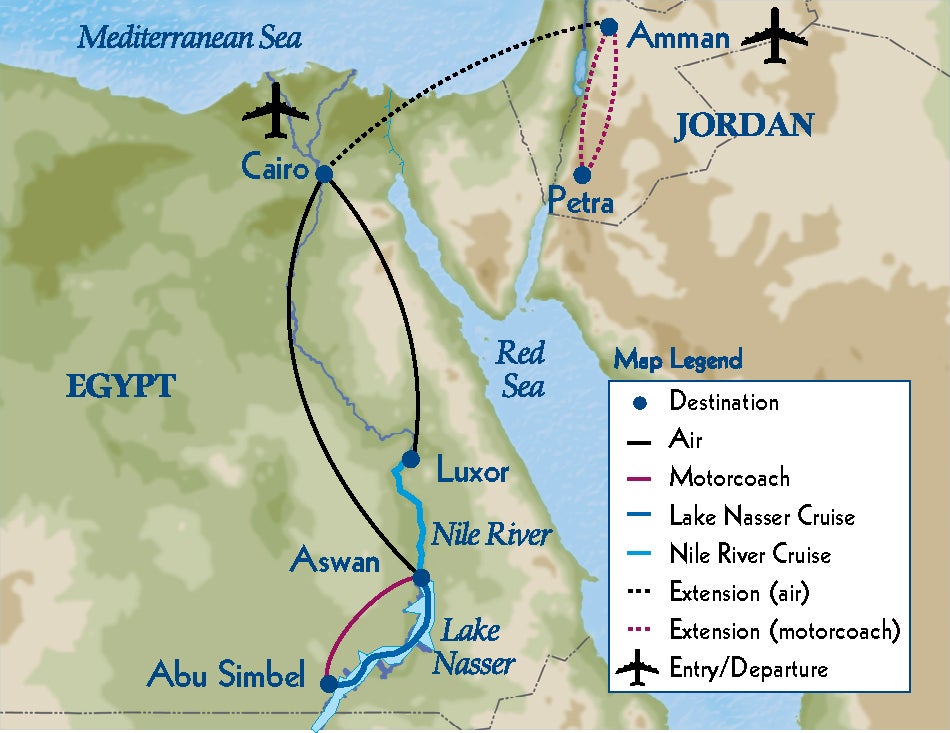
Experience the wonders of ancient and modern Egypt on this 15-day journey that begins in Cairo, where you explore the dazzling new Grand Egyptian Museum and stand before the timeless Pyramids of Giza and the Sphinx. Fly south to Aswan to learn how the mighty Nile was transformed by the High Dam before embarking on a four-night Lake Nasser cruise through historic Nubia, visiting relocated temples at Kalabsha, Wadi el-Seboua, Amada, and the monumental complex of Abu Simbel, dramatically preserved above the rising waters. Continue by motorcoach across the Sahara back to Aswan to board your Nile cruise ship, sailing in traditional feluccas and visiting Kom Ombo and Edfu before arriving in Luxor, home to the awe-inspiring temples of Karnak and Luxor and the royal tombs of the Valley of the Kings and Queens. After a stay in Luxor, return to Cairo to immerse yourself in the bustling Khan el-Khalili bazaar, the hilltop Citadel of Saladin, and the sacred sites of Old Cairo, including ancient churches and the historic Ben Ezra Synagogue. Throughout, enjoy comfortable stays at premium hotels and aboard elegant cruise ships, with guided touring, cultural encounters, and time at leisure, before concluding your epic Nile adventure with a final farewell in Cairo and departure for home.

itinerary map

calendar icon

Schedule by Day

Click each drop-down below to view a detailed itinerary. For a full view, please select the "print page" button above.

Depart Home City for Cairo, Egypt on an overnight flight.

We arrive in the Egyptian capital today. As guests’ arrival times may vary greatly, we have no group activities or meals planned.

Overnight: Kempinski Nile Hotel Garden City Cairo 

We meet our fellow travelers and our tour director, who gives us a morning briefing about the journey ahead. Then, we set out for our first stop on tour and a highlight of our journey: the Grand Egyptian Museum (GEM), standing within sight of Giza’s three Pyramids and ranking as one of the world’s newest must-visit destinations. Finally opened to the public in late 2025 after some 22 years of planning and construction, the GEM is the largest archaeological museum complex in the world with a collection including over 100,000 artifacts spanning 700,000 years of Egyptian history, from pre-historic times to the heyday of pharaonic rule to the (relatively) recent Greco-Roman era. We take a guided tour to view the museum’s many treasures, in particular spending time at the Tutankhamun exhibit, where every one of the ~5,000 artifacts from the boy king’s tomb (including his famed gold mask and sarcophagus) are now collected and on display together for the first time. We also see Khufu’s Solar Boat, the 142-foot royal vessel that was recovered intact from a pit beside the Great Pyramid of Giza. We enjoy lunch at the museum before having free time to explore some of the many exhibitions on our own. This evening, we gather for a welcome dinner at a local restaurant.

Overnight: Kempinski Nile Hotel Garden City Cairo 

Meals: B, L, D

It’s a very early morning as we set off for a flight to Aswan, where we visit the Aswan High Dam. Considered a miracle of engineering when completed in 1965 after some 18 years of work, the dam was built to harness the mighty Nile. Numbers tell part of the story: it stands 11,811 feet long, 364 feet tall, and at its base is 3,215 feet thick. For some context, 18 times more material was used to construct the Aswan High Dam than to construct the Great Pyramid at Giza. But in addition to doubling Egypt’s electrical supply, the dam’s construction – and subsequent creation of Lake Nasser, one of the world’s largest manmade lakes – also caused the relocation of up to 90,000 Nubians from their homeland and the potential flooding of many irreplaceable monuments in the lowlands, including legendary Abu Simbel. To preserve these monuments, the Egyptian Department of Antiquities, in conjunction with UNESCO, embarked on a rescue project beyond the scope of anything ever attempted: they dismantled several ancient sites, stone by heavy stone, and rebuilt them on higher ground. During our tour of this region, we tour monuments and temples which have been moved from their original location and now sit higher up, away from Lake Nasser’s edge. 

After visiting the dam, we embark our river ship for our four-night Lake Nasser cruise. After lunch on board, we visit the Temples of Philae, a complex of ancient Egyptian temple ruins dating from the 4th century BCE. Originally located further upstream, the temples (which contain the purported burial place of the god Osiris) were moved to their current location on Agilkia Island to protect them from the rising waters of Lake Nasser. Tonight, we dine and overnight aboard our Lake Nasser ship docked in Aswan.

Overnight: Steigenberger Omar el Khayam

Meals: B, L, D

We are in the heart of ancient Nubia, the kingdom that bordered southern Egypt during antiquity and was Egypt’s gateway to Africa. Though heavily influenced and often ruled by Egypt, Nubia had a culture and history distinct from that of its more powerful neighbor. It had its own kings, some of which were cooperative with Egypt’s, while others were competitive. While Nubia has long been incorporated as a part of modern Egypt, some Nubians have struggled to maintain their cultures and traditions, much of which are now dying out because of assimilation and changing times. This morning, we set out to tour New Kalabsha, site of Kalabsha Temple, the largest freestanding Nubian temple of them all, which was moved and reconstructed here from Old Kalabsha when Lake Nasser’s rising waters threatened the site. This sandstone temple dedicated to Mandulis, the Nubian god of religion, preserves Egyptian and Greek history; both languages are carved into the temple walls. After exploring the site, we return to our ship for lunch. We then sail to Wadi el-Seboua where we dock for the evening. 

Overnight: Steigenberger Omar el Khayam

Meals: B, L, D

We spend this morning in Wadi el-Seboua exploring the reconstructed Dakka temple, dedicated to Thoth, the god of wisdom and justice. We also visit the Temple of Meharakka, dedicated to Serapis, a god created to unite the Greek and Egyptian religions. These temples were significant elements of the Aswan High Dam relocation project; both were preserved and moved to their current locations during the 1960s. We then set sail on Lake Nasser and enjoy lunch on board as we cruise to Amada. Here, we tour the 18th-dynasty Temple of Amada, built during the reign of Tutmosis III and the oldest surviving Lake Nasser temple. Amazingly, in order to preserve its fragile paintings, the temple was moved in one piece to its current location – not block by block as with the other Nubian temples. We enjoy dinner on board and overnight in Amada.

Overnight: Steigenberger Omar el Khayam

Meals: B, L, D

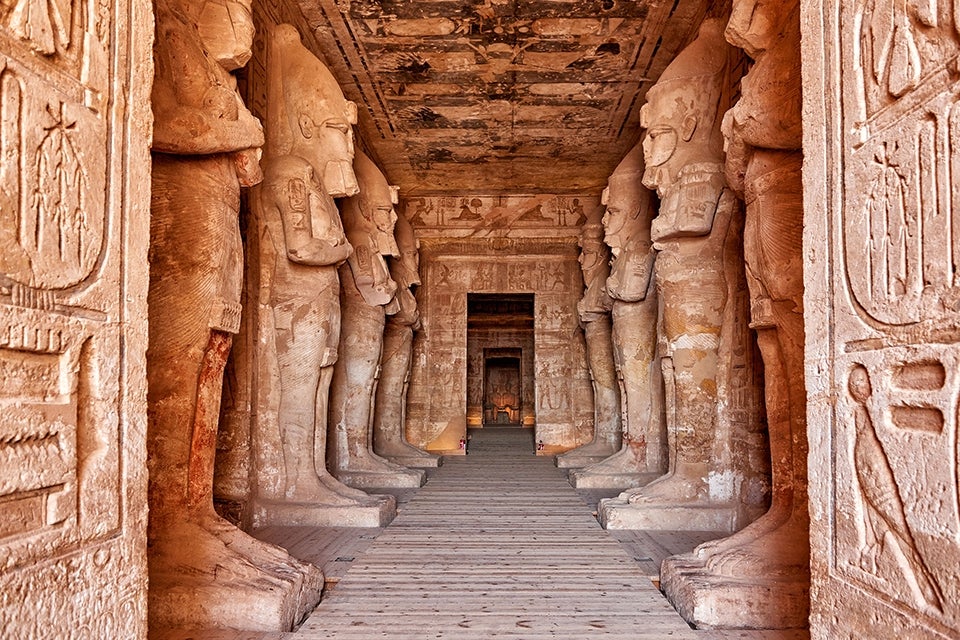
During breakfast this morning, we sail to the settlement of Kasr Ibrim, the last vestige of Nubian culture still in its original location. After a brief visit during which we learn about this ancient settlement from our ship (as it’s prohibited to go ashore here), we enjoy lunch on board then cruise to Abu Simbel. Here, we see the results of audacious rescue efforts performed by the Egyptian Department of Antiquities. One of the most breathtaking locations in all of Egypt, Abu Simbel comprises a massive complex of temples guarded by four colossal statues of Ramses II, each more than 60 feet high. Inside, the walls are covered with incredibly well-preserved murals depicting scenes of Queen Nefertari and her court, and of King Ramses in battle. This is truly an astonishing place; one we are glad was preserved for posterity. After our visit, we have an afternoon at leisure aboard our ship. As the desert sun goes down, we return to Abu Simbel and enjoy a sound-and-light show amid the massive statuary here. Then, we return to our ship in time for dinner on board.

Overnight: Steigenberger Omar el Khayam

Meals: B, L, D

After breakfast this morning, we disembark our ship and board a motorcoach for the 3½-hour ride across a corner of the Sahara to Aswan. Here we embark the second ship of our tour, our home for the three-night Nile cruise, and enjoy lunch together on board. This afternoon, we tour the Nubia Museum, an acclaimed showcase of Nubian art and architecture. Completed in 1997, the museum received the Aga Khan Award for Architecture in 2001 and is renowned as a center of African and Middle Eastern archaeology and scholarship. Then, we dine and overnight aboard our Nile ship in Aswan.

Overnight: M/S Royal Lotus

Meals: B, L, D

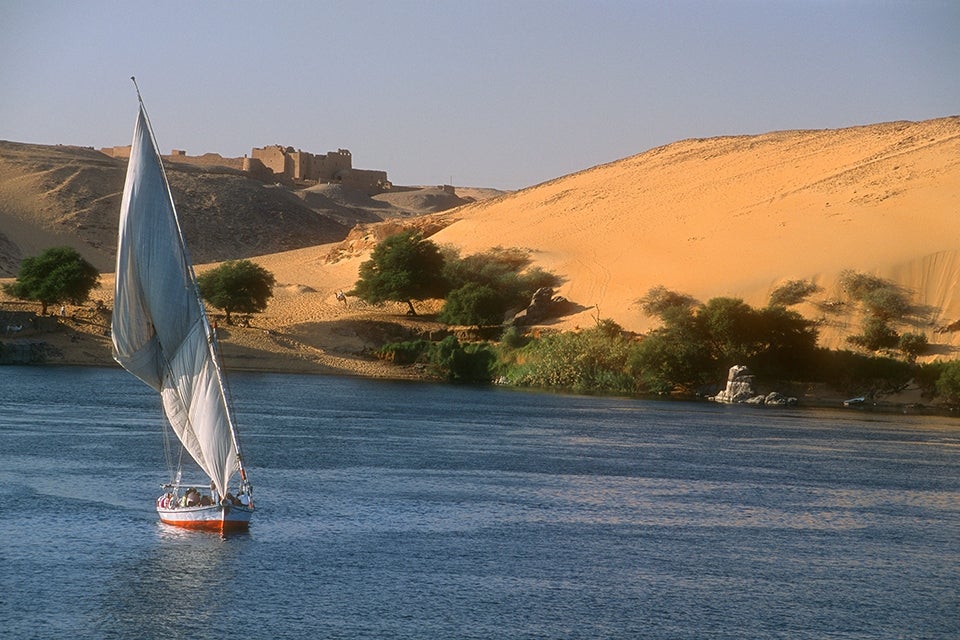
This morning we board small feluccas, replicas of ancient Nile sailboats, for a relaxing sail. We admire the river scenery as we make our way slowly down the Nile, passing close by the Botanical Gardens on Kitchener’s Island, named after British Army officer Lord Kitchener who served as Consul General of Egypt from 1911 to 1914; Elephantine Island, with its huge granite rocks; and the tomb of the Aga Khan. Back on board our cruise ship, we enjoy lunch together and then sail to the site of the ancient trading town at Kom Ombo, which sat on the great caravan route from Nubia. Here we see outstanding Nile views from an unusual double temple, dedicated both to the crocodile god Sobek and to the falcon god Haroeris (Horus the Elder). We enjoy dinner on our ship and then take an evening sail to Edfu. On board tonight, we are invited to a party wearing traditional Egyptian galabeya as we overnight dockside in Edfu.

Overnight: M/S Royal Lotus

Meals: B, L, D

This morning, we explore Edfu’s Temple of Horus, considered Egypt’s best-preserved ancient temple (having spent centuries buried beneath desert sands). Construction of the complex began under Ptolemy III in 237 BCE and was completed nearly 200 years later; the temple’s remains were not discovered until 1900. We see the 12 enormous columns that stand in front of the Great Halls and stop to admire the wall inscriptions in the Hall of Consecrations. We return to our ship for lunch and this afternoon’s cruise to Luxor (our final sail), enjoying afternoon tea along the way.

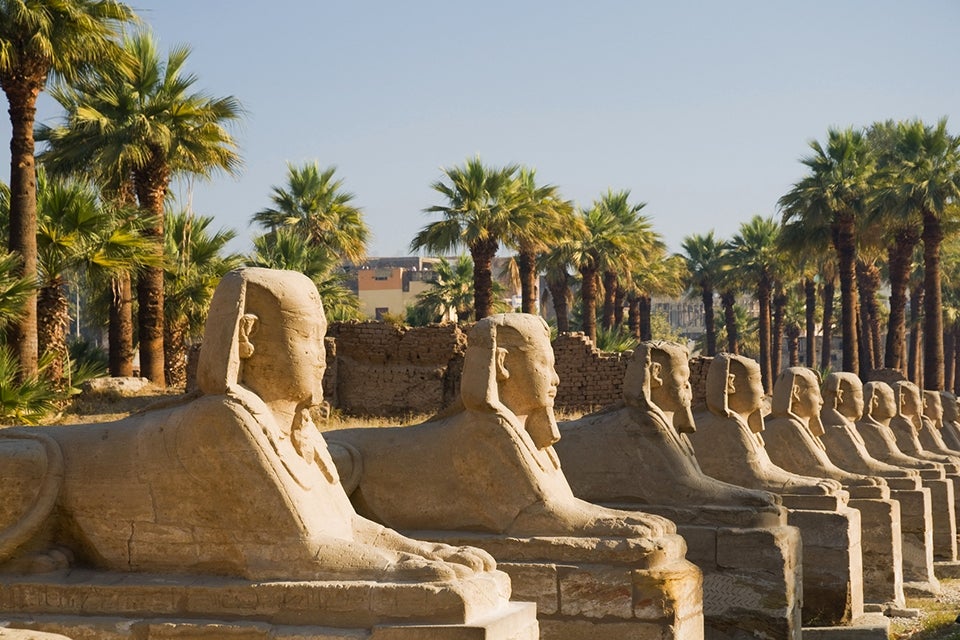
Upon arrival in Luxor this afternoon, we head to the East Bank where we visit the splendid Karnak Temple, which was under construction for some 1,500 years. It comprises the three main temples of Amun, Mut, and Montu, as well as smaller enclosed temples and several outer temples located a short distance north of Luxor. We also see the temple’s enormous pylons, the Temple of Ramses II, the Great Hypostyle Hall, and the two Obelisks of Hatshepsut. Next, we travel to Luxor Temple, where the statue of Amun-Ra, the sun god and god of creation, would travel in a procession from Karnak Temple for festivals held during annual flood season. Over the years, more rulers built onto the temple, including Tutankhamun, Ramses II, and even Alexander the Great. We visit the Great Court of Ramses II, the Temple of the Theban Triad, and the obelisk, whose twin stands in the Place de la Concorde in Paris. Tonight on board is a show of Middle Eastern belly dancing; we dine on our ship.

Overnight: M/S Royal Lotus

Meals: B, L, D

We may wish to rise early this morning and view the West Bank of “the world’s greatest open-air museum,” as Luxor has been called, from above in an optional hot air balloon ride. (At the time of printing, the cost of the 45-minute balloon ride is approximately $120USD per person). Later this morning, we disembark our Nile ship and set out on an exploration of the Luxor West Bank, a region that surpasses even Cairo in the number and importance of its ancient sites. We begin at the haunting Valley of the Kings and Valley of the Queens, an isolated valley holding the tombs of more than 50 New Kingdom monarchs and nobles, each in a tomb constructed underground in an attempt to mirror the underworld. For many years, Egyptians inhabited this vast City of the Dead to protect the tombs from grave robbers – though sadly, some of the tombs were indeed looted over the centuries. What remain, however, are some of the most magnificent paintings we will see anywhere in Egypt. The tombs were filled with sand, which not only protected everything inside, but also served as a sort of embalming element for the paintings, preserving them from the wind and sun. Today some of the paintings have been covered by glass for further protection. To visit all the tombs would be impossible; our tour director will select some of the most interesting for us to see. Continuing on, we visit the dramatic Temple of Hatshepsut, dedicated to one of the few female pharaohs; and the enormous Colossi of Memnon, two 64-foot-high statues that once guarded the gates of a mortuary temple. Then, we enjoy lunch with a local family before checking in at our hotel where we have the afternoon and evening free to relax and enjoy the hotel’s amenities. Dinner tonight is on our own.

Overnight: Steigenberger Nile Palace

Meals: B, L

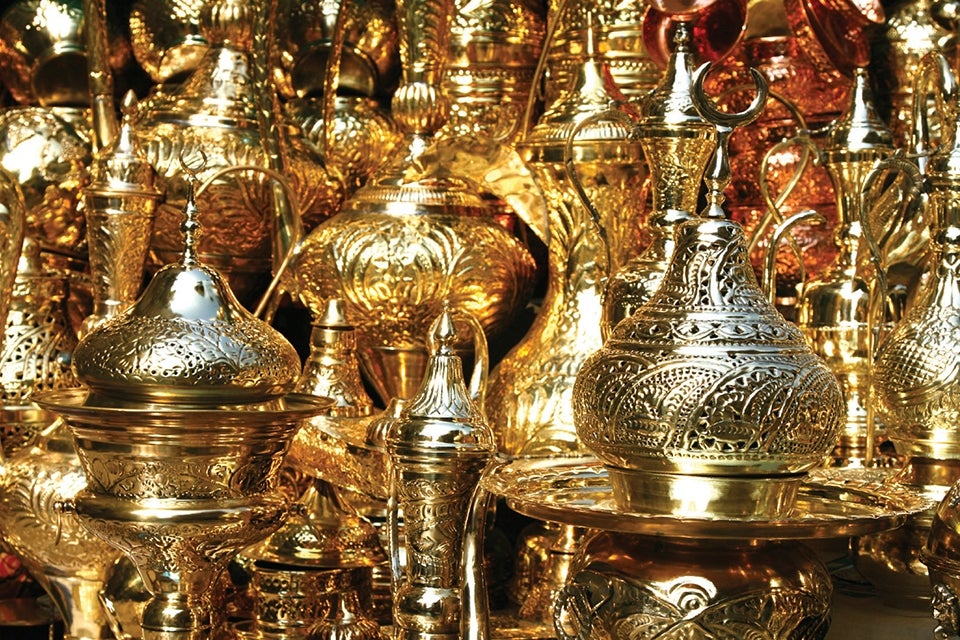
Early this morning, we transfer to the airport for the flight to Cairo. Upon arrival, we navigate the exotic Khan el-Khalili bazaar, Cairo’s most popular and believed to be the largest in the Middle East, if not the world. Here we can visit artisans who have passed down their skill from generation to generation, perfecting all types of crafts including wood, perfume, leather goods, and glassware. There are bargains to be had on almost every corner, but shoppers are expected to barter hard for them.

We then tour the Citadel of Saladin, a spectacular medieval fortress set high on a hill with extraordinary views of the city below. Built in 1176 to guard against the Crusaders, the Citadel was the home of Egyptian 

rulers for nearly 700 years, including famed leader Muhammad Ali, whose gilt tomb is inside. After time for lunch on our own, we check in to our hotel and have the remainder of the day free to spend as we wish. Dinner tonight is on our own.

Overnight: Kempinski Nile Hotel Garden City Cairo

Meals: B

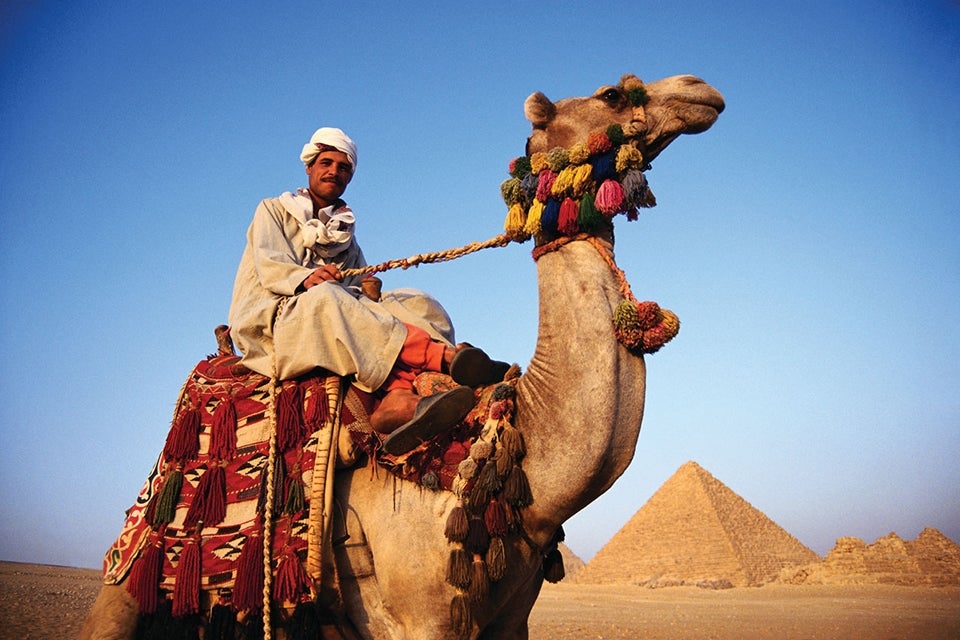
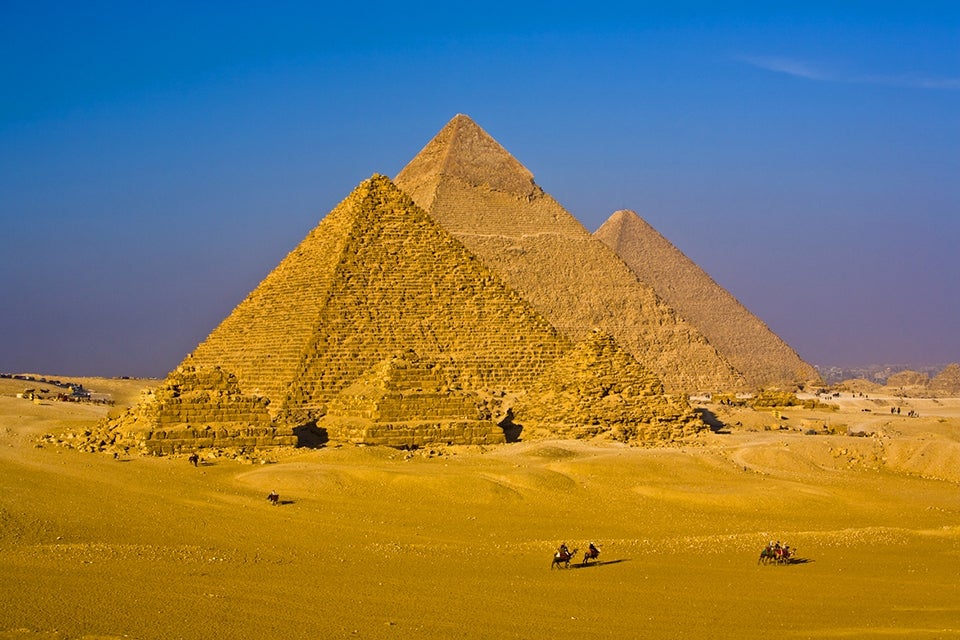
This morning, we return to the Giza Plateau and its three famed pyramids, including the Great Pyramid (or Pyramid of Cheops), which ranks among the Seven Wonders of the Ancient World. A truly awe-inspiring sight, the Great Pyramid was built around 2600 BCE, and at more than 450 feet tall, was the tallest man-made structure on earth for nearly 3,800 years. In front of the Pyramids stands the serene Sphinx, whose leonine body and human face were carved almost entirely of one piece of limestone and submerged by desert sands for thousands of years. We spend time visiting the pyramids, seeing them up close and marveling at their 4,600-year longevity. 

After lunch together at a local restaurant, it’s on to Old Cairo, so named because the ancient Roman fort named Babylon stood here. This area – the city’s oldest section – is also known as Coptic Cairo due to its concentration of historic Coptic churches. These churches are among the holiest sites for Egypt’s Coptic Christian community, making up some 10% of the country’s population. We begin at 5th-century St. Sergius, the oldest church in the area. Inside, 12 columns representing the 12 Apostles separate the nave from the aisles. We also visit el-Muallaqa, the “hanging church” built over the bastions of a Roman gate. Believed to date from the 7th century, the church features a ceiling that resembles an ark, and a carved marble pulpit considered the finest in Egypt. 

We continue on to St. George’s Church, dating to the 10th century and built on top of an ancient Roman tower. Famed as the only round church in Egypt, St. George’s still functions as an active house of worship, and ranks as Egypt’s principal Greek Orthodox church. Finally, we reach Ben Ezra Synagogue, the Jewish synagogue-turned-museum where, according to local legend, baby Moses was found floating on the Nile some 3,300 years ago. Evidence of Ben Ezra’s founding predates 882 CE, making it Egypt’s oldest synagogue; however, the building we see today was constructed in the 12th century, rebuilt in the 19th century, and underwent extensive restoration work in 2022. Later this afternoon, we return to the hotel. Dinner tonight is on our own.

Overnight: Kempinski Nile Hotel Garden City Cairo

Meals: B, L

Today we visit some of the finest sites in Egyptian antiquity, beginning this morning at the open-air museum at Memphis, Egypt’s first capital. The history of Memphis stretches so far back into history that its origins have been lost to time; the city was already in existence during the reign of Iry-Hor, the pharaoh of Upper Egypt during the 32nd century BCE and one of the earliest historical figures known to mankind by name. Once a magnificent city ruled by legendary King Menes who united Upper and Lower Egypt, Memphis is now a pleasant remnant of long-ago times, with sculptures, a Sphinx, and a limestone colossus of Ramses II. 

Our next stop is at nearby Sakkara, a necropolis used for more than 3,000 years to bury Old Kingdom royalty – and still largely unexcavated today. Much of Sakkara’s splendor remains and can be seen in the Step Pyramid, which was once the largest stone structure ever built. The Step Pyramid forms the center of a remarkable funerary complex, which includes a broad “hypostyle” hall (a structure whose roof is supported by columns), a great court, and stone altars representing Upper and Lower Egypt. 

We return to our hotel at midday; this afternoon is at leisure for further independent exploration or relaxing and enjoying our hotel’s amenities. Lunch is on our own today. Tonight, we celebrate our adventure along the Nile at a farewell dinner at our hotel.

Overnight: Kempinski Nile Hotel Garden City Cairo

Meals: B, D

Very early this morning, we transfer to the airport for our return flight to the United States.

Meals: B

price icon


Pricing

Category

Double Occupancy

Single Occupancy

Land Only

$6,995 per person

$8,590

Air-inclusive from BOS, JFK

$8,127 per person

$9,792

Round trip air transportation from listed cities above; Hotel accommodations per the itinerary; meals per the itinerary: breakfast daily, 10 lunches, 9 dinners; wine/beer/soft drinks and water included with group lunches and dinners; welcome and farewell receptions; (no beer/wine on for lunches on Days 3, 11, 12) entrance fees to all sites listed in the itinerary; land transportation by private motorcoach per itinerary; bottled water on bus while touring; transfers to/from the airport upon arrival and departure for those booking Operator’s air reservations; services of an experienced tour director; luggage handling upon arrival and departure at the hotels; all gratuities; complete pre-tour documentation and materials.

Operator brochure production and mailing; passport and visa fees; airport porterage; transfers for land only guests; meals not included in the itinerary; optional sightseeing excursions, any personal items not listed as included such as telephone calls, personal services and travel extensions, room service, liquors (other than what is listed above), mineral water, à la carte orders and laundry charges; COVID tests before, during, or after program; trip cancellation and interruption insurance.

To reserve a space on this program, a $2,000 deposit is required per person. Final payment is due 120 days before departure (October 15, 2026) payable by major credit card, check, or wire transfer. Participants will receive an invoice directly from the tour operator, Odysseys Unlimited for all subsequent payments after the initial deposit.

Notification of cancellation must be received in writing by HAA from the participant. Cancellations received within 14 days of booking are eligible for a full refund, provided that initial deposits were made 121 days or more prior to departure. After 14 days, $1,000 per person becomes non-refundable.

The program terms and conditions can be found here and must be acknowledged upon registration.


Accommodations

  • Two nights at Kempinski Nile Hotel Garden City in Cairo
  • Four nights aboard Steigenberger Omar el Khayam
  • Three nights aboard M/S Royal Lotus
  • One night at Steigenberger Nile Palace in Luxor
  • Three nights at Kempinski Nile Hotel Garden City in Cairo

Optional Post-Tour Extension: Jordan: Petra & Amman

February 26 - March 2, 2027

Extend your adventure with a 5-day journey through Jordan, beginning with a flight from Cairo to Amman and a scenic drive to Petra via Madaba, the “City of Mosaics,” where you view its famed 6th‑century mosaic map of the Holy Land. Spend a full day exploring the UNESCO World Heritage Site of Petra, entering on foot through the dramatic siq canyon to behold the iconic façade of the Treasury, then continuing among rock‑hewn tombs, temples, and streets that reveal the sophistication of the ancient Nabatean civilization. Travel back to Amman along the historic Desert Highway, stopping at Mt. Nebo—traditionally the burial place of Moses—for sweeping views over the Jordan Valley and visits to early Byzantine churches, as well as a local mosaic workshop that keeps this ancient art alive. In Amman, discover one of the world’s oldest continuously inhabited cities as you visit the impressive Roman Theatre and hilltop Citadel, then venture north to Jerash, the remarkably preserved “Pompeii of the East,” where colonnaded avenues, temples, churches, and theaters evoke the grandeur of the Roman Empire. Comfortable stays in Petra and Amman, along with included meals and guided sightseeing, round out this rich cultural extension before you transfer to the airport for your return flights home.

Overnight: Movenpick Resort in Petra (2 nights), Grand Hyatt in Amman (2 nights)

Meals: 4B, 3L, 3D

  • $1,995 per person, double occupancy
  • $2,430 single occupancy

The opportunity to register for the extension will be provided directly from the tour operator following the participants confirmation on the program

What to Expect

Activity Level 3

activity iconThis program involves 2–4 miles of walking per day, sometimes during the heat of the day, including walking up hills or stairs (often without handrails) on cobblestone streets and at sites of ancient ruins, as well as moderate hikes on uneven terrain and visits inside dimly lit tombs and temples. Entering the interior of a pyramid is particularly demanding, as it is only accessible through a small 3'–4' high shaft that requires guests to walk uphill, crouched over, at an angle for about 150 steps over approximately 15 minutes, and is not recommended for those who are claustrophobic or have mobility issues. The itinerary also includes long days of motorcoach travel and sightseeing, early morning wake-up calls for flights or to visit sites before the day’s heat, and requires the ability to embark and disembark boats—sometimes via a small plank—as well as to get on and off the motorcoach several times a day without assistance. For these reasons, this program is not suitable for guests with mobility issues or for those who use walkers, scooters, or rollators.
Study Leader(s)

To be announced

For More Information

Please email haatravels@harvard.edu or call our office at 800-422-1636 or 617-496-0806.